

EVs and bad weather are not a new combination, but the questions keep coming back every autumn. Can you plug in during a downpour? What happens when the connector is caked in snow? Does a heatwave damage the charger? The short answer is that modern EV charging is designed for the outdoors, and weather itself is rarely the problem. What causes trouble is damaged equipment, poor habits and, most often, the outlet behind the charger.
This guide explains what is actually safe in rain, snow, cold and extreme heat, what charger ratings really tell you, and a handful of simple habits that keep you charging without drama all year.
Is It Safe to Charge in the Rain?
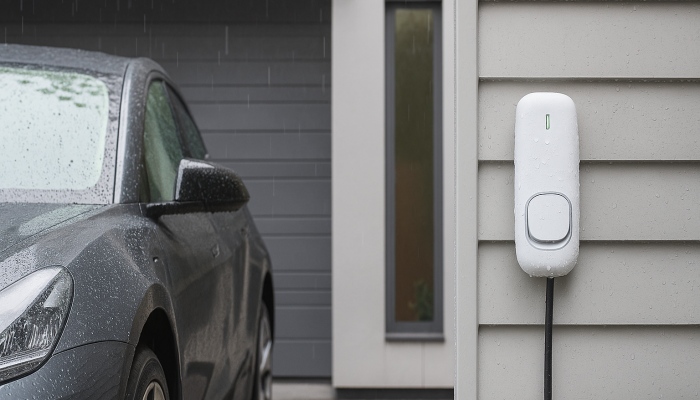
Yes. EV charging in rain is safe when the equipment is in good condition and used as intended. Millions of drivers charge outdoors every day, and the system is engineered with several layers of protection:
- The connection is not live until the car says so. Before power flows, the charger and the car exchange a signal confirming that the plug is fully seated. Without that handshake, the contacts stay de-energized.
- Ground-fault protection is built in. Chargers and cars monitor for current leaking to ground, and cut power within a fraction of a second if they detect it.
- Connectors and inlets are sealed. The plug and the car's charge port are designed to resist water when properly mated.
That is why a common worry, getting shocked by a wet plug, is far less likely than people expect. It is also why the real-world precautions are mostly about common sense:
- Do not charge if the equipment is damaged. Cracked housings, exposed wires, a loose plug or a frayed cable are reasons to stop, rain or not.
- Keep the connector off the ground. Do not leave it lying in a puddle, and do not let it sit in standing water.
- Never charge in a flood. If water is above the level of the outlet, charger or car's charge port, stay away and disconnect only if you can do so safely from a dry position.
- Make sure the plug is fully seated before walking away, especially in heavy rain, so the car completes its handshake.
A good rule: light or heavy rain on a healthy, rated charger is fine. Standing water, damaged equipment or a flooded area is not.
Reading IP ratings
You will see an IP rating on most chargers, and it is the best single clue to how well a unit handles weather. IP stands for Ingress Protection and comes from the international standard IEC 60529. The code has two digits:
- First digit (0–6): protection against solid objects, from fingers to fine dust.
- Second digit (0–9): protection against water.
A higher number means more protection, but the numbers are not a simple scale of quality. They describe specific tests. The next section explains what two common ratings actually mean.
What IP65 / IP67 Actually Protect Against
If you have wondered about the IP65 EV charger meaning, here it is in plain language.
|
Rating |
Dust |
Water |
In practice |
|---|---|---|---|
|
IP54 |
Limited dust ingress |
Splashing from any direction |
Fine for covered spots and light rain |
|
IP65 |
Fully dust-tight |
Low-pressure water jets from any direction |
Suited to outdoor wall mounting and heavy rain |
|
IP66 |
Fully dust-tight |
Powerful water jets |
Extra margin for storm-exposed locations |
|
IP67 |
Fully dust-tight |
Temporary immersion (typically up to 1 m for 30 minutes) |
Survives brief submersion, such as a puddle |
What the numbers do not tell you
- IP65 is not waterproof. It covers jets of water, such as heavy rain and a garden hose, not sitting under water.
- IP67 is not permanent submersion. It is a short, controlled test, not a guarantee for a flooded driveway.
- Ratings usually apply to the enclosure and a correctly closed connection. An unplugged connector with the cap off, or a cable end lying open on wet ground, is not covered the same way.
- Ratings do not cover salt, ice or damage. A rating is measured on new equipment in clean water. Road salt, freezing and wear can reduce real-world performance.
When you shop for a charger that will live outdoors, look for a rating of IP54 at minimum for covered areas and IP65 or higher for open driveways. Always follow the manufacturer's installation guidance. For the underlying standard, see the International Electrotechnical Commission.
Snow, Ice & Road Salt: Practical Tips
Snow is mostly an inconvenience, not a hazard. Ice and salt are where small problems begin.
- Clear the charge port and connector before plugging in. Use a soft brush or a dry cloth to remove snow and ice. Do not chip at ice with sharp metal tools, which can damage contacts and seals.
- Never force a frozen connector. If the plug is stuck or the latch will not release, let the car warm up or use the car's unlock function, then try again gently.
- Do not pour hot water over the port. A sudden temperature change can crack plastic and force meltwater into places you do not want it.
- Keep the cable off the ground. Loop it over a hook or hold it above the snow line. Cables stiffen in the cold, and a kinked or twisted cable is more likely to be damaged.
- Watch for salt buildup. Road salt can crust on the plug and inside the port, which can accelerate corrosion and make a poor connection. Wipe the connector with a dry or barely damp cloth, and have the port inspected if you see green or white residue on the contacts.
- Do not bury the charger. Equipment installed too low can get snowed in. If drifts are common where you live, mount it higher.
A quick inspection takes 20 seconds, and it is the cheapest habit that keeps winter charging problem-free.
Cold Weather: Why Charging Slows & Battery Preconditioning
If you are charging an EV in cold weather, you may notice it taking longer than in summer. That is normal, and it is not a charger fault.
Lithium-ion batteries are chemically slower when cold. To protect the battery from damage, the car's battery management system limits how fast it will accept power until the pack warms up. At very low temperatures, the car may also divert some of the incoming energy to heat the battery before charging at full speed. The result is a slower start and, on very cold days, a noticeably longer session.
Cold also reduces driving range, because the battery is less efficient and the cabin heater draws power. Range loss varies widely with temperature, speed and heater use, and can be significant on the coldest days.

How to charge smarter in the cold
- Plug in as soon as you park. A battery that is still warm from driving charges faster than one that has sat overnight.
- Use preconditioning. Most EVs can warm the battery and cabin while plugged in, so that energy comes from the grid instead of the battery. Set a departure time in your car's app or menu, and the car will be warm and ready when you leave.
- Charge at home when you can. A Level 2 AC session overnight is gentle and works with the car's warming system, while DC fast charging in the cold is where slowdowns are most obvious.
- Do not let the battery sit at a very low state of charge in freezing weather. Keeping a healthy buffer gives the car energy for preconditioning.
- Check your manual. Each model has its own cold-weather behavior, and your manufacturer's guidance always wins.
Extreme Heat: Thermal Derating
Heat does not usually stop charging, but it can quietly slow it down. The reason has a name: thermal derating.
Both chargers and cars monitor internal temperatures. If the charger, the plug or the battery gets too warm, the system reduces the current on purpose so that nothing overheats. Derating is a safety feature, not a defect, and it is a sign the equipment is doing its job.
What this means in a heatwave
- Expect longer sessions on very hot days. Direct sun on the charger, a hot garage and a hot battery all add up.
- Park and charge in shade when possible. A shaded or covered location keeps both the equipment and the car cooler.
- Charge during cooler hours. Evening and overnight charging is easier on the equipment and often cheaper on time-of-use rates.
- Do not coil a cable while it is in use. A tightly coiled cable can trap heat. Unspool it fully, and keep it out of direct sun.
- Do not cover the charger. Blankets, boxes or a closed cabinet block airflow.
- Know what warm feels like. A plug that is warm to the touch is normal. If it is too hot to hold comfortably, or you smell burning, stop charging and have the equipment inspected.
Also keep in mind that heat affects the car too: when the pack is hot, the car may cool the battery with its own system before accepting full power.
The Real Risk Is the Wall Outlet, Not the Charger
Here is the part most weather guides skip. In the vast majority of overheating incidents with portable and home charging, the weak point is not the charger itself, which has temperature sensors and protective circuits. It is the outlet and wiring behind it.
EV charging is a long, steady load, often running for hours at high current. That is much harder on an outlet than a lamp or a phone charger. Over time, worn contacts, loose connections and the heat of a long session can turn a small problem into a hot one, and wet or humid conditions make it worse.
How to keep the outlet side safe
- Use a dedicated circuit. Do not share the circuit with other heavy appliances.
- Match the outlet to the charger. In North America, continuous loads should generally stay within 80% of the circuit's rating. A 15 A household circuit, for example, is best limited to about 12 A for steady charging.
- Never use a standard extension cord. If you must reach a socket, use only equipment rated for EV charging by the manufacturer.
- Choose a weather-protected outdoor outlet. An outdoor socket should be rated for outdoor use, protected by ground-fault protection, and covered by a weatherproof in-use cover while plugged in.
- Inspect the outlet regularly. A plug that is loose, discolored, buzzing or noticeably warm is a warning sign. Stop and have an electrician check it.
- Hire a licensed electrician to install or upgrade the outlet, especially for higher-current charging such as a 240 V circuit.
For general home-charging guidance, the U.S. Department of Energy's Alternative Fuels Data Center is a good neutral reference. If you are considering a portable unit that suits your outlet, our portable EV charger collection lists the options.
Between-Season Storage & Care
A charger that is cared for lasts years longer, and the shoulder seasons are the ideal time for a quick service.
- Clean before storing. Wipe the plug and cable with a dry or slightly damp cloth, and let everything dry completely.
- Inspect the cable and connector. Look for cracks, cuts, bent pins or discolored contacts, and retire anything that looks damaged.
- Test the safety features. If your charger has a test button, check that it works, as the manufacturer instructs.
- Coil loosely. Wrap the cable in wide loops, never tight kinks, and keep it off the floor.
- Cover the connector. Use the supplied cap or a clean bag to keep dust, moisture and insects out.
- Store indoors, away from sun. Avoid long periods in a hot trunk, direct sunlight or a damp basement.
- Check the outlet too. Tighten and inspect it as part of your pre-season routine, using a qualified electrician if needed.
Before the first cold snap, do the same quick check: wiggle-test the plug, look for corrosion and confirm the cable still moves freely. If you are unsure whether your setup is right for your climate, talk to our team.
FAQ
Can you charge an EV in the rain?
Yes. Charging an EV in the rain is safe with undamaged, properly rated equipment. The charger and car do not send power until the connection is confirmed, and ground-fault protection shuts it off if a fault is detected. Avoid standing water and never charge in a flood.
What does IP65 mean for an EV charger?
IP65 means the enclosure is fully dust-tight (the 6) and protected against low-pressure water jets from any direction (the 5). It is well suited to outdoor use in heavy rain, but it is not designed for submersion.
Is it safe to charge during a thunderstorm?
It is generally safe for normal weather. During severe lightning, however, a nearby strike can cause a power surge. If you can do so safely, consider waiting out intense electrical storms, and consider whole-home surge protection.
Is it safe to charge an EV in snow?
Yes. Clear snow and ice from the port and connector first, keep the cable off the ground, and do not force a frozen plug. Watch for road-salt buildup on the contacts.
Does cold weather damage the battery or the charger?
Cold does not normally damage either, but it does slow charging and reduces range. The car's battery management system protects the battery by limiting charging speed until it warms up. Preconditioning while plugged in helps.
Why is my EV charging slowly in hot weather?
Thermal derating. The charger, the connector or the battery reduces the power level when it gets warm, to keep everything within safe limits. Charging in the shade or at cooler times helps.
Can I leave my charger outside all year?
If it is rated for outdoor use, installed correctly and inspected periodically, yes. A portable charger, however, is best stored indoors when not in use, and a weatherproof cover or enclosure helps any outdoor outlet.
Can I use an extension cord to charge my EV?
Standard extension cords are not recommended, since EV charging is a long, high-current load. Use only equipment the charger or car manufacturer approves, and have an electrician install an outlet where you need one.
This article is general information and not a substitute for your vehicle manual, charger instructions or a qualified electrician. Always follow the manufacturer's guidance and local electrical codes.