

BYD has just posted the kind of number that reframes how you think about the global EV transition. In October 2026, the Chinese automaker sold 305,743 battery-electric vehicles — its first month above 300,000, and up 37% year over year.
For scale: the entire United States sold an estimated 262,649 EVs in the whole third quarter, according to Kelley Blue Book figures published by Cox Automotive. One company, one month, one country, one quarter.
And the gap isn't really about cars. It's about everything that makes electric driving practical — above all, charging.
The Numbers Behind the Record
- 305,743 BEVs sold in October — a record, and 63% of BYD's total volume
- 490,168 new energy vehicles (BEV + PHEV) sold, up 11% year over year
- 170,194 vehicles exported in October, with 1.5 million electrified exports year-to-date — nearly double last year
- 1,953,700 BEVs sold through October, up 6% year over year
- PHEV sales down 17% in October to 177,382 — the mix is tilting decisively toward pure electric
That last point is the quiet story. BYD's plug-in hybrids are shrinking while its BEVs accelerate, and the company credits exactly what you'd expect: longer range and faster charging on models using its Blade Battery 2.0 and Flash Charging technology.

Why the US Gap Is a Charging Gap
The US market isn't short of demand — Q3 was its strongest quarter in a year, with EVs taking 6.4% of new-vehicle sales, up from 5.8% in Q2, per Cox Automotive's Q3 report. Gas above $4 a gallon is doing its part. But three structural differences explain why one Chinese company out-sells an entire national market — and why China now accounts for more than half of global electric car sales, as the IEA's Global EV Outlook documents:
1. Home charging access. The majority of Chinese urban EV buyers can charge where they park, often on cheap off-peak residential tariffs. In the US, apartment dwellers and renters remain the largest underserved group — and no amount of public fast charging fully replaces a plug at home.
2. Charging density and reliability. China's public charging network is denser and, crucially, more consistently functional. In the US, reliability complaints remain the top friction point for road-tripping EV owners.
3. Price and product cadence. BYD fields dozens of models across price bands, refreshed on cycles Western automakers struggle to match — with the end of federal incentives in the US adding another headwind to volume.
None of this is about engineering talent. It's about the cost of charging, the certainty of finding a working plug, and how quickly new products reach buyers.
Flash Charging: The Next Infrastructure Fight
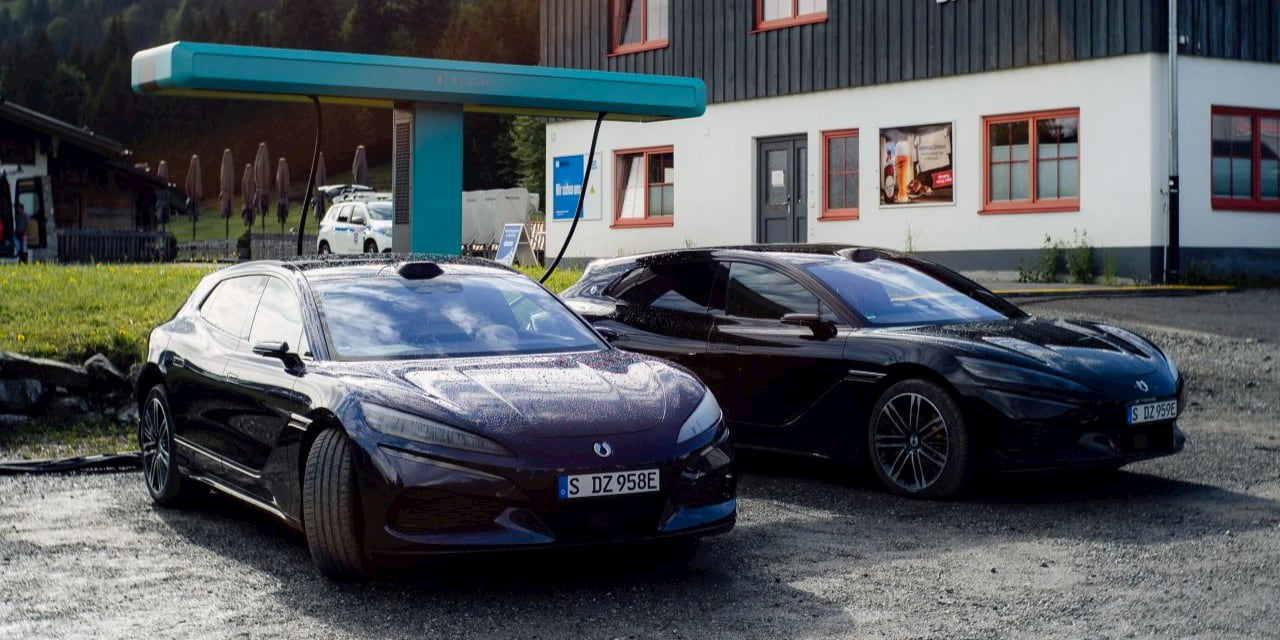
BYD's Flash Charging push — and the first Flash Chargers opening in Germany — matters beyond BYD's own sales figures. Ultra-fast charging resets customer expectations, and every automaker selling into Europe or North America now has to answer it.
Two practical consequences for drivers and charging operators:
- Peak power becomes a marketing number. Most EVs still can't hold peak charging power for long. If you want to understand why the advertised kW is only one point on a curve, our explainer on Level 1, Level 2 and DC fast charging covers the mechanics.
- Battery preparation becomes the real differentiator. A car that arrives at a 500 kW charger with a cold pack charges like a 100 kW car. Preconditioning — covered in our guide to why winter EV charging slows down — is what turns headline charging speeds into actual minutes saved.
Export Machine: What Arrives in Europe Next
BYD exported 170,194 vehicles in October alone and expects roughly 2 million overseas shipments in 2026, rising above 2.5 million in 2027. Europe, Southeast Asia and Central and South America are the priority markets — which means European buyers will see more BYD product, more price pressure on legacy brands, and more Chinese-built cars at European charging stations.
For American drivers, the picture is different: BYD doesn't sell passenger cars in the US, so the practical impact shows up indirectly — as competitive pressure on pricing, and as a benchmark that US charging networks will be measured against.
What This Means for EV Owners
Three takeaways worth acting on:
- Home charging remains the cheapest and most reliable energy you can buy. Public networks are improving, but the economics of charging at home are still unmatched — which is why we keep recommending properly rated Level 2 hardware over dependence on public DC charging.
- The charging standards war is settled enough to plan around. NACS in North America, CCS2/Type 2 in Europe — adapters and correct cables matter more than brand loyalty.
- Expect faster charging to arrive unevenly. Vehicle capability will outpace station capability in many regions, so plan road trips around reliable hubs, not headline kW figures.
The Bottom Line
BYD's 305,000-unit month is a milestone, but it's not a magic trick — it's the compound result of cheap home charging, dense public infrastructure, aggressive product cadence and vertical integration in batteries. The US, fresh off its best quarter in a year, is recovering from an incentive-driven hangover and still building the charging base that makes EVs a no-compromise choice.
The lesson for everyone else isn't "buy Chinese." It's that charging access is the adoption rate. Where plugging in is easy, cheap and boring, EV sales follow.
FAQ
How many EVs did BYD sell in October 2026?
305,743 battery-electric vehicles — a monthly record, up 37% year over year, plus 177,382 plug-in hybrids for a total of 490,168 new energy vehicles.
Is that really more than the US sold in a quarter?
Yes. Kelley Blue Book estimates put US Q3 2026 EV sales at 262,649 units, so BYD's single October exceeded the entire US third quarter.
Why is US EV growth slower than China's?
Home charging access, charging network density and reliability, product choice and pricing, plus the expiration of federal purchase incentives in the US. US EV share still rose to 6.4% in Q3 2026 from 5.8% in Q2.
Does BYD's growth affect EV drivers in the US and Europe?
In Europe, directly — more models, more price pressure, and BYD's Flash Charging network arriving. In the US, indirectly, through competitive pressure and higher expectations for charging speed and reliability.