

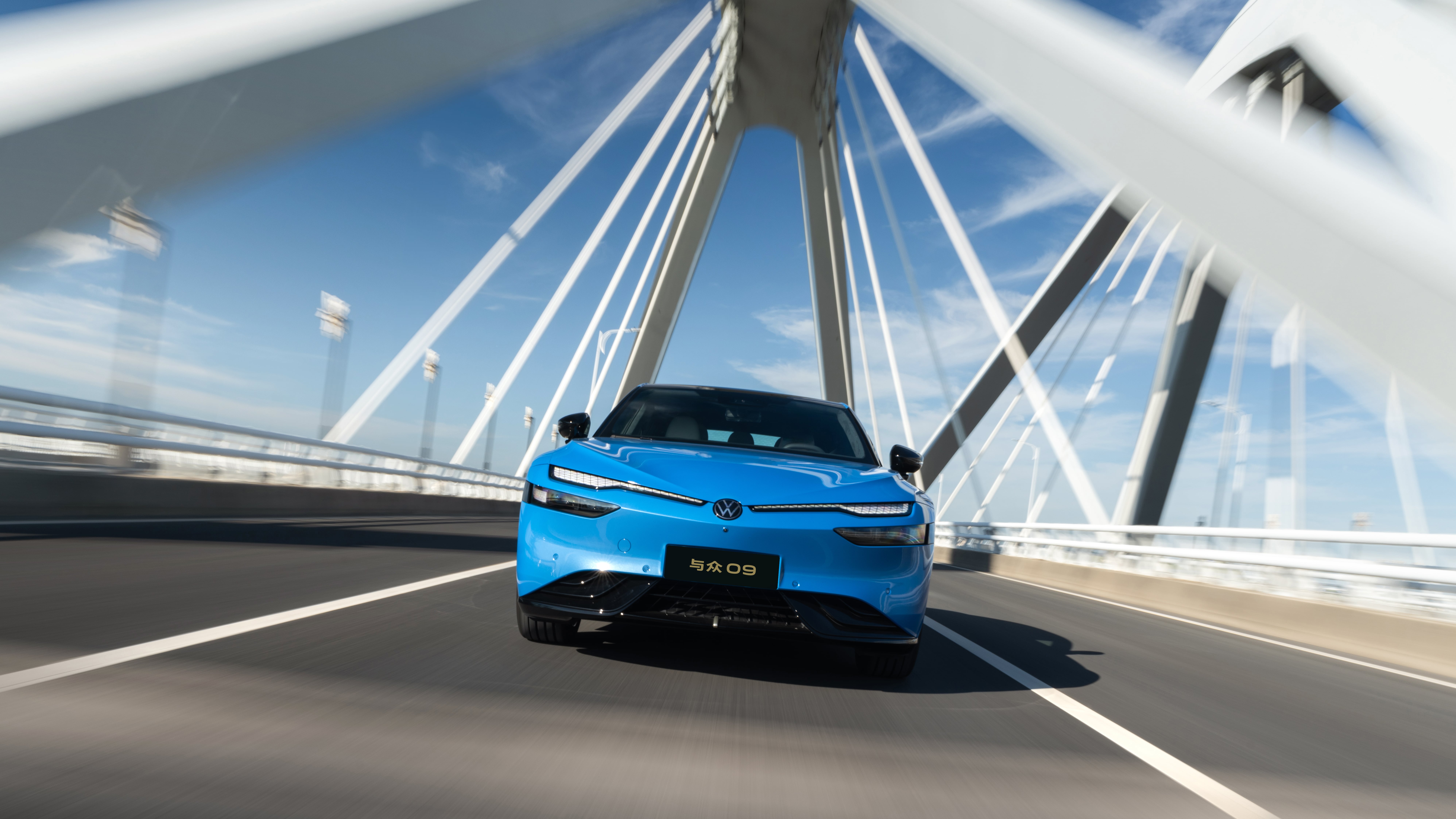
Volkswagen has fired its most aggressive shot yet in China's electric sedan price war. On October 24, 2026, Volkswagen Anhui launched the ID. UNYX 09 — a large electric sedan co-developed with XPeng — at list prices of 179,900 to 249,900 CNY (roughly 26,780–37,200). That puts the entry trim a full 40,000 CNY below the cheapest Xiaomi SU7, while claiming more range on paper.
But beneath the headline pricing, the spec that deserves the most attention from EV enthusiasts is charging performance: the ID. UNYX 09 is the first Volkswagen-brand model with 5C fast charging, capable of adding 250 km of range in just five minutes. Here's everything confirmed about the new sedan — and what its charging technology says about where the industry is heading.
ID. UNYX 09 Pricing: Three Trims, One Aggressive Entry Point
The launch range undercuts the segment leader by design. There are three trims:
|
Trim |
List Price |
Drivetrain |
|
Ultra |
179,900 CNY (~$26,780) |
Single rear motor, 230 kW (308 hp) |
|
Fully equipped |
219,900 CNY (~$32,730) |
Single rear motor, 230 kW (308 hp) |
|
Max |
249,900 CNY (~$37,200) |
Dual motor, 370 kW (496 hp) |
A Double 11 promotion drops the black Ultra trim to 169,900 CNY — but only for 500 cars, so most buyers will start at 179,900 CNY. Notably, the starting price fell 20,000 CNY below the September pre-sales figure, while the top trim held its price. Financing offers include down payments from 33,980 CNY with three years interest-free, or zero down over five years with monthly payments from 728 CNY.
How It Stacks Up Against the Xiaomi SU7
The target is clear. The second-generation Xiaomi SU7, launched March 19, 2026, starts at 219,900 CNY, with the Pro at 249,900 CNY and the Max at 303,900 CNY. Against that line-up, the ID. UNYX 09 offers:
- 40,000 CNY list-price advantage at the entry point
- More claimed range: 755 km CLTC versus the SU7 Standard's 720 km (though the SU7 Pro's 902 km remains unmatched)
- A longer body: 5,081 mm long and 1,980 mm wide on a 3,030 mm wheelbase
The timing matters, too. SU7 momentum is softening: September 2026 retail sales were 15,751, down 4.6% from August and 19.6% below September 2025. Volkswagen Anhui clearly hopes a value-focused flagship will capture fence-sitters. Whether it works is an open question — the ID. UNYX 08's September price cut tripled its monthly sales, but that was still under a tenth of the SU7's volume.
Performance and Range: 755 km CLTC and a 4.6-Second Max
The Ultra and mid trims use a single rear motor rated at 230 kW (308 hp) for a 755 km CLTC range. The Max adds a 140 kW front motor for a combined 370 kW (496 hp), sprints to 100 km/h in 4.6 seconds, and is rated at 705 km.
Chassis hardware leans premium: dual-chamber air suspension and ZF adaptive dampers on the top two trims, front double wishbones, a five-link rear axle and Brembo front calipers.
5C Fast Charging: Why the ID. UNYX 09 Is a Milestone
Here's where the 09 gets genuinely interesting. Every version uses the same 91.963 kWh lithium iron phosphate (LFP) pack built with CATL Shenxing cells, on an 800-volt silicon carbide platform. Volkswagen Anhui bills it as the first Volkswagen-brand model with 5C charging:
- Peak charging power: 530 kW
- 250 km of range added in 5 minutes
- 10–80% in under 12 minutes
That's remarkable for LFP chemistry, which has historically lagged nickel-based cells in charging speed. If you're wondering what rapid 5C charging does to long-term battery health, our guide to EV battery degradation after 3, 5 and 10 years explains what's normal wear and what isn't.
What 5C DC charging doesn't change: home charging reality
As dramatic as 530 kW peak power sounds, the vast majority of charging sessions — for the ID. UNYX 09 or any EV — happen on AC power at home or work. The 09's 91.963 kWh pack simply cannot be refilled quickly from a household socket, no matter how capable the car is. Understanding the difference is essential: our explainer on AC vs DC EV charging for home use breaks down why DC fast charging converts power outside the car while AC charging relies on the onboard charger, and why charging rates at home are capped accordingly.
The same applies to wiring: households with three-phase supply can charge roughly three times faster than single-phase homes, assuming the vehicle supports it. Our single-phase vs three-phase EV charging guide covers the practical implications.
XPeng-Sourced Driver Assistance: 750 TOPS and VLA
The software side comes from the XPeng partnership. A Turing AI chip with 750 TOPS runs a vision-language-action (VLA) model supporting highway and city navigation on autopilot (NOA), plus a parking-space-to-parking-space mode that can store up to 10 routes of about 100 km each. The sensor suite counts 26 pieces of hardware — 11 cameras, three millimeter-wave radars, 12 ultrasonic sensors — with no LiDAR, unlike the refreshed ID. UNYX 06 and 07, which use roof-mounted LiDAR and a Horizon Robotics chip.
The AI-driven cockpit trend is now industry-wide; our analysis of how AI chips are redefining the electric vehicle future looks at why compute power is becoming as important as horsepower.
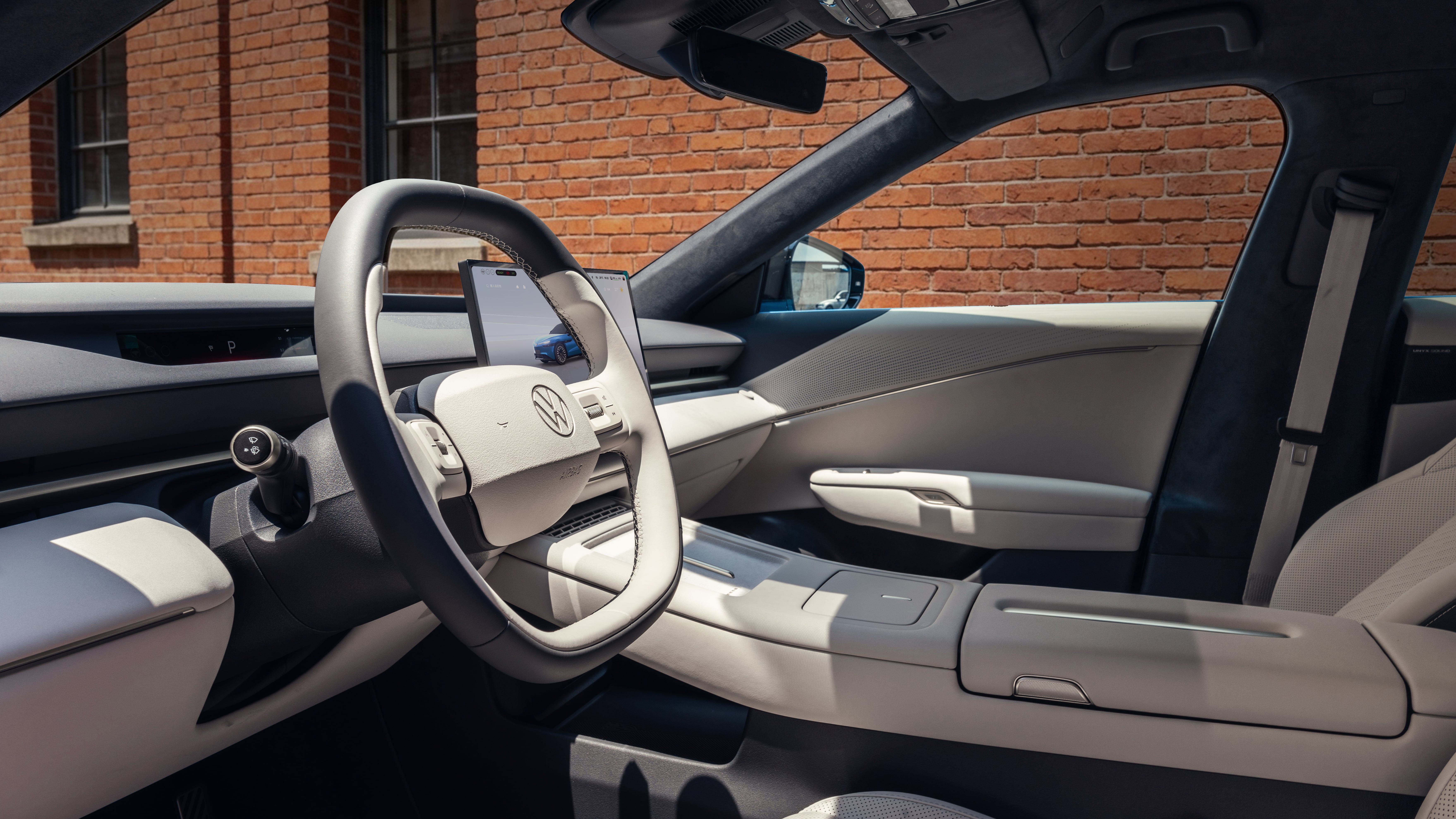
Inside, a 15.6-inch center screen runs on a Qualcomm Snapdragon 8295P, and an 85-inch AR head-up display rated at 12,000 nits spans three lanes — both standard across the range.
The Volkswagen–XPeng Partnership Context
The ID. UNYX 09 is the second Volkswagen model jointly developed with XPeng, after the ID. UNYX 08 SUV. Volkswagen agreed in July 2023 to invest $700 million in XPeng, with two Volkswagen-branded models planned on XPeng's platform and software architecture. Volkswagen Anhui now fields a four-model family — the 06, 07, 08 and 09.
The 09 also arrives with typical Volkswagen engineering reassurances: crash testing with safety margins beyond national standards and 3.5 million km of durability testing across two winters and two summers.
What This Price War Means for EV Buyers
A 179,900 CNY large sedan with 755 km CLTC range, 5C charging and XPeng-grade driver assistance shows how quickly Chinese-market EV value is compressing. A few trends worth watching:
- Ultra-fast charging is going mainstream. 5C charging was a flagship-only feature in 2024; it's now appearing at the 180,000 CNY price point. The gap between "flagship tech" and "affordable tech" keeps shrinking.
- LFP batteries are closing the performance gap. Once seen as the budget chemistry, LFP now anchors a 530 kW charging system — with better cycle life as a bonus.
- Software partnerships are the new normal. Volkswagen co-developing with XPeng, in the same market where Xiaomi sells cars, shows that legacy automakers no longer treat in-house software as non-negotiable.
And for buyers outside China, the practical takeaway is simple: the technology that debuts on cars like the UNYX 09 — 800V platforms, 5C charging, LFP packs — tends to reach global markets within one or two product cycles. Understanding the difference between charger types — Level 1, Level 2 and DC fast charging is the best way to prepare for what arrives next, because home AC charging will remain the daily routine no matter how fast public charging gets.
Frequently Asked Questions
How much does the VW ID. UNYX 09 cost?
List prices run from 179,900 to 249,900 CNY (about 26,780–37,200). A limited Double 11 offer of 169,900 CNY applies only to the black Ultra trim, capped at 500 cars.
How fast does the ID. UNYX 09 charge?
It's the first Volkswagen with 5C fast charging on an 800V silicon carbide platform: peak power of 530 kW, 250 km of range in five minutes, and 10–80% in under 12 minutes on a suitable DC charger.
Is the ID. UNYX 09 cheaper than the Xiaomi SU7?
Yes — by 40,000 CNY at the entry level (179,900 vs 219,900 CNY), with more claimed CLTC range (755 km vs 720 km), though the SU7 Pro's 902 km range remains out of reach.
Does the ID. UNYX 09 have LiDAR?
No. It uses a 26-sensor vision-based suite (11 cameras, 3 radars, 12 ultrasonic) running on a 750 TOPS Turing AI chip, unlike the refreshed ID. UNYX 06 and 07 which add roof-mounted LiDAR.